

How to choose the right battery for your boat?
Power supply is a key element in ensuring the proper functioning of a boat's equipment. Whether for lighting, navigation instruments, engines, or on-board comfort equipment, it is essential to choose the right battery to ensure autonomy and safety. Here is a complete guide to help you choose the marine battery adapted to your needs.
1. Understanding marine battery types Lead-acid batteries (Wet Cell)
-
✅ Pros: Economical and commonly used, available in high capacities.
-
❌ Cons: Regular maintenance required (checking and adding distilled water), sensitive to vibrations and tilting.
AGM Batteries (Absorbed Glass Mat)
-
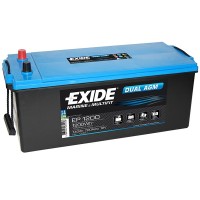
✅ Pros: Maintenance-free, good resistance to vibrations, fast charging.
-
❌ Cons: Higher cost than open lead-acid batteries.
Gel Batteries
-
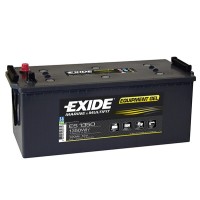
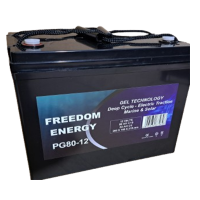
✅ Pros: Long lifespan, ideal for deep discharge cycles, resistant to extreme temperatures.
-
❌ Cons: Less efficient in terms of instantaneous power, slower charging.
Lithium Batteries (LiFePO4)
-
✅ Pros: Very lightweight, cycle life 3 to 5 times longer than an AGM battery, ultra-fast charging, very low self-discharge.
-
❌ Cons: High cost, requires a specific management system (BMS).
2. Determining your energy needs
Before buying a battery, it is essential to evaluate your daily electrical consumption. Here are the steps to calculate your energy requirement:
-
List your electrical equipment (lighting, fridge, navigation instruments, etc.)
-
Note their power consumption in watts (W)
-
Determine their daily usage time (h)
-
Use the formula: Required capacity (Ah) = (Total power in W x Duration in h) / Voltage in V Example: A 60W fridge operating 10h per day at 12V = (60 x 10) / 12 = 50Ah
-
Add up all your consumption to determine the total capacity required.
3. Choosing the right capacity and voltage
-
Capacity (Ah): It is recommended to opt for a capacity higher than your needs to anticipate unforeseen events.
-
Voltage (V): Most boats use 12V, but for more complex systems, 24V or 48V can be found.
4. Starting battery or service battery?
-
Starting battery: Provides a high current to start the engine but does not withstand deep discharges.
-
Service battery: Provides energy to the boat's equipment and is designed to withstand repeated discharges.
-
Dual-purpose batteries: A compromise between the two, but less efficient in each specific area.
5. Maintaining your battery properly to extend its life
-
Never discharge completely:
-
Lead-acid: Do not drop below 50% charge.
-
AGM/Gel: Ideally 40% minimum charge.
-
Lithium: Can go down to 20%, but regular charging extends its life.
-
Avoid extreme temperatures:
-
Store the battery in a dry and ventilated place.
-
Protect it from temperature variations.
-
Charge it correctly:
-
Use a charger adapted to the battery type.
-
Regularly check connections and terminals.
Conclusion The choice of your marine battery depends on your energy needs, your budget, and the space available on board. A good understanding of the different types of batteries and regular maintenance will ensure optimal use and increased longevity.
Need help choosing your battery? Contact us or visit us in-store!