

Everything about macerator pumps: Function, failures, and maintenance
1. How does a macerator pump actually work?
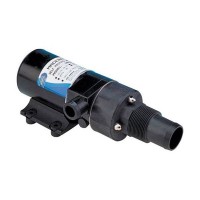
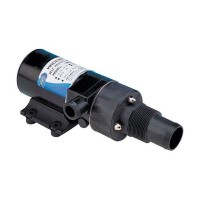
Unlike a standard bilge pump, the macerator has a dual mission: grind solids and propel liquids toward the black water tank (holding tank) or authorized overboard discharge.
The internal mechanics: a power duo The secret of its efficiency lies in the combination of two elements mounted on the same motor shaft:
-
The Grinding Blade (Stainless Steel): This is the first stage. Located right at the pump inlet, these blades spin at high speed to reduce waste and toilet paper into fine particles. A good shredder turns solids into a homogeneous liquid slurry to prevent clogs in small-diameter piping (often 25mm or 38mm).
-
The Centrifugal Impeller: Once the materials are ground, they pass through a cutter plate to reach the impeller. This vaned wheel (often made of nitrile or neoprene) creates the pressure needed to suction from the toilet and discharge the waste.
Did you know? A macerator pump can spin up to 3000 RPM. At this speed, even the slightest resistance can cause immediate motor overheating.
2. Why it blocks: The "enemies" of the macerator
The number one cause of failure is almost never mechanical; it is human. The pump is designed to handle only organic matter and biodegradable toilet paper.
-
Wipes (even "flushable"): These are the plague of marinas. Their synthetic fibers are extremely strong and wrap around the blade shaft, creating a "nest" that eventually locks the motor.
-
Hair and Threads: They seep behind the blades and attack the mechanical seal (the shaft's watertight seal). Once the seal is breached, water enters the electric motor: the pump is fried.
-
Hard Objects: Cotton swabs, hygiene products, or small toys instantly jam the blades, blowing the fuse or burning the motor winding.
3. When should you service or replace your pump?
Don't wait for a total blockage to act. A macerator pump "talks" before it fails.
The signs that don't lie:
-
Noise changes: If you hear a high-pitched growl or if the motor seems to struggle (deeper sound than usual), it means something is hindering rotation or the bearings are worn.
-
Slow evacuation: If the discharge cycle takes twice as long, the impeller is likely worn or partially clogged. Impeller vanes lose flexibility over time and no longer create enough vacuum.
-
Leaks and odors: If you notice slight moisture under the pump body, the mechanical seal is no longer watertight. Act fast! If the liquid reaches the motor, the pump will be beyond repair.
The importance of winterization Limescale is the "cancer" of marine pumps. By drying during the winter, limescale hardens on the blades and the impeller. In the spring, when restarting, the pump may be blocked by these deposits.
-
Tip: Always rinse with fresh water and use a maintenance agent for black water circuits before leaving the boat for the winter.
? Mr. Lyvio's Tip
"Don't replace the whole pump at the slightest problem! Most major brands like Jabsco, Whale, or Johnson Pump offer service kits. Replacing the cutter blades and the seal/impeller kit once every 3 years will cost you three times less than a new pump and will guarantee total peace of mind at anchor. Think about it before your next big cruise!"